



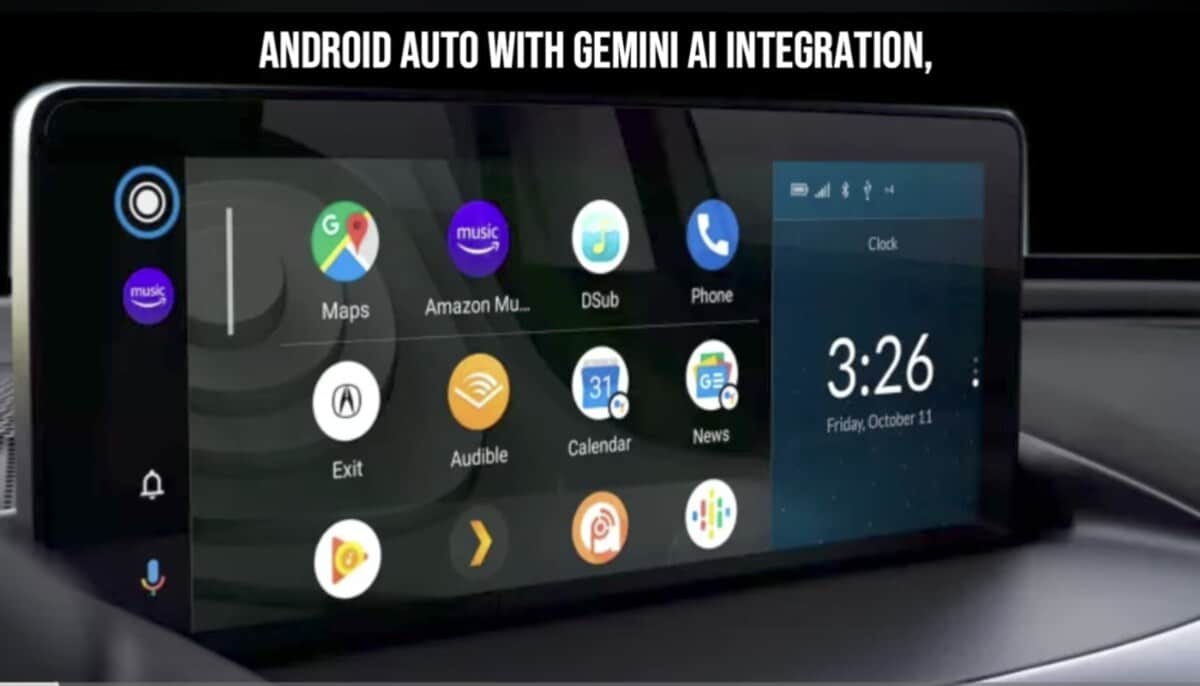
Google’s increasing focus on Gemini AI appears to be coming at the expense of Google Assistant, and nowhere is this more obvious than on Android Auto. Over the past few months, user experience on Android Auto has noticeably declined, and it doesn’t look like Google is in a hurry to fix it.

Throughout most of 2025, Google heavily promoted Gemini before finally beginning its rollout in November. As expected, the rollout has been gradual, and even now, Gemini is still unavailable to many eligible users. While Google continues to refine Gemini, Google Assistant has been left behind, despite the fact that it remains the primary assistant for millions of users—especially drivers who depend on it daily.
Android Auto Experience Continues to Decline
As Google shifts its attention to Gemini, issues with Google Assistant on Android Auto have become more frequent. Voice commands often fail, responses are inconsistent, and overall reliability has dropped. This is particularly frustrating for drivers who rely on hands-free interaction to stay focused on the road.
Although Gemini is clearly more advanced than the traditional Assistant, it still lacks tight integration with Android Auto apps. This results in awkward behavior, such as Gemini continuing to talk long after completing a command, forcing users to manually stop it using the touchscreen—something that defeats the purpose of voice control while driving.
Gemini Rollout Is Slow and Still Buggy
What makes the situation worse is the slow pace of Gemini’s rollout. Months after its initial release—and more than two months since users first got access—several major issues remain unresolved. Meanwhile, a large portion of users are still stuck with Google Assistant, which continues to underperform with little sign of improvement.
This puts users in a difficult position:
- Stick with a broken Google Assistant, or
- Switch to Gemini, which is still incomplete and inconsistent
Neither option offers a smooth Android Auto experience right now.
Safety Concerns for Drivers
One of the most worrying outcomes of this transition is driver safety. With voice commands failing more often, users are spending extra time interacting with the touchscreen to complete basic tasks. This increased distraction is far from ideal and raises legitimate safety concerns for anyone using Android Auto while driving.
Gemini Has Potential, but Google Needs to Move Faster
There’s no doubt that Gemini has the potential to significantly improve Android Auto once fully polished and widely available. However, Google’s slow rollout strategy—and its apparent decision to ignore ongoing Google Assistant issues—has made things unnecessarily difficult for users.
It’s clear that Google has moved on from the traditional Assistant, but until Gemini is ready for everyone, Android Auto users are stuck in limbo. Speeding up the Gemini rollout and addressing current Android Auto problems should be a top priority if Google wants to restore confidence in its in-car assistant experience.
via: 9to5Google
